International Schools in Thailand at a Glance: Curricula, Accreditation and Dependant Visa Basics
翻訳を準備中です。英語の原文を表示しています。
A overview of the curricula offered by Thailand's international schools, the legal accreditation requirement, the school structure and the oversight bodies. The dependant visa section only relays what the embassy guide says.
公的な情報源をもとにAIが執筆・事実確認しました・最終確認 2026-10-29
This article is for parents who are starting to look at international schools in Thailand, whether because of a work posting or a planned move. It gives a broad picture of the curricula on offer and how to check a school. Figures and rules can change, so confirm them with the official bodies and the school at the end.
Thailand's school structure and who oversees it
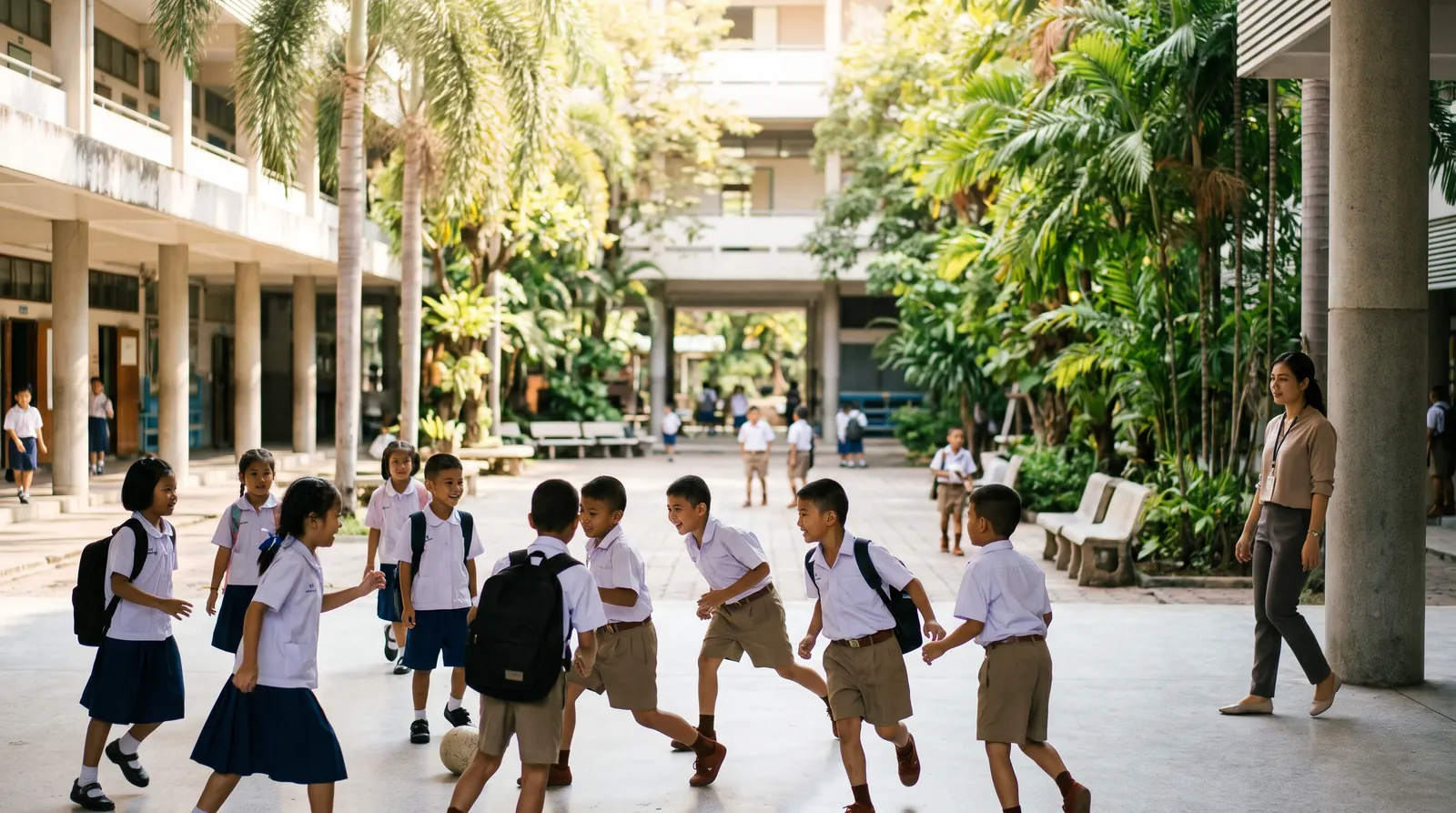
According to the English translation of the National Education Act published by Thailand's Ministry of Education (checked 2026-10-30), the state provides at least 12 years of free basic education. Nine years are compulsory, from about age 7 to about 16. The translation is unofficial and only the Thai text is authoritative. Ask the school how grades are divided.
International schools are private schools licensed by the Office of the Private Education Commission (OPEC). OPEC's April 2026 manual for reviewing international-school curricula says schools may use foreign curricula as they are or adapt them; its appendix gives English, American, IB and Singapore examples. Every international school must teach Thai language, Thai culture and Thai history to Thai and non-Thai students, as OPEC sets out. School calendars differ, so check each school's own.
A wide range of curricula
According to the International Schools Association of Thailand (ISAT), the options include:
- American: AP, SAT
- British: IGCSE, A Level
- IB: PYP, MYP, DP, CP
- National curricula: Australian, Canadian, French, German, Japanese, Indian, Singaporean and others
- IPC and Montessori
Each school offers different programmes. Think about whether the curriculum connects with the country your child may move to next.
Accreditation is required by law
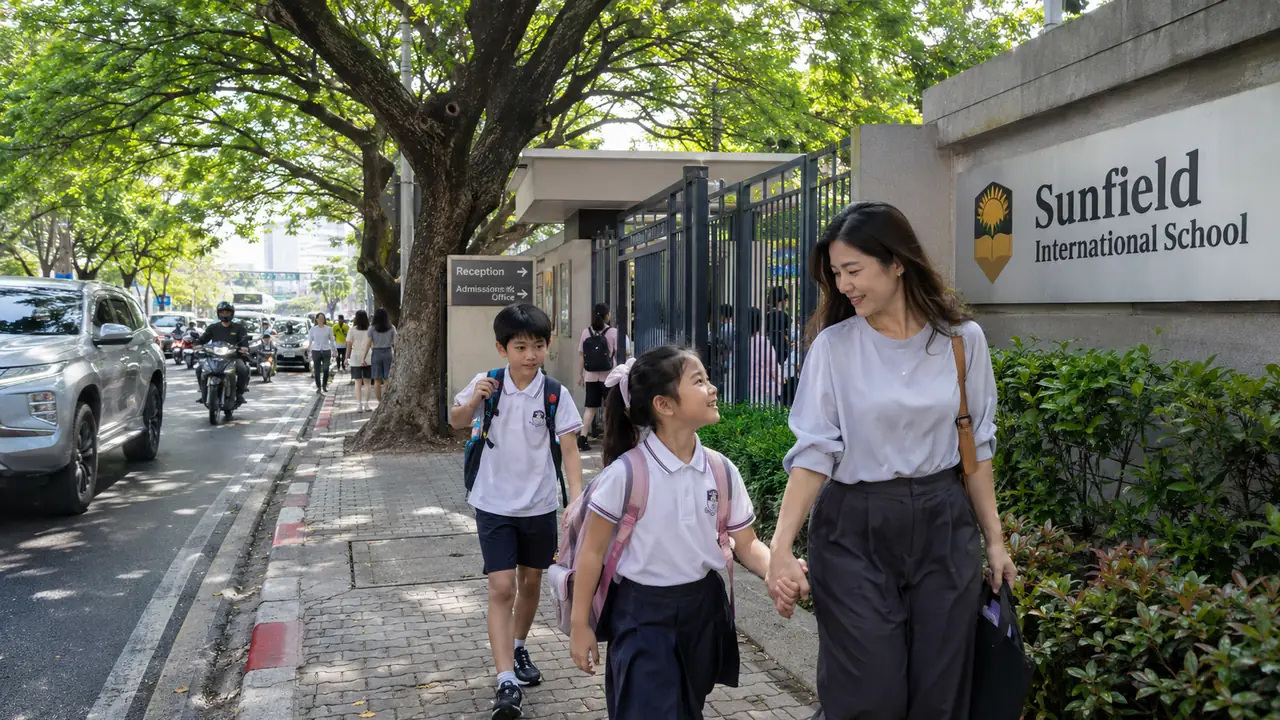
ISAT says that by law every international school in Thailand must be accredited by a recognised overseas agency by the end of its fifth year. The recognised agencies are ten bodies approved by OPEC, including CIS, WASC, NEASC, COBIS, Cognia, EDT and ISI. Schools must also be accredited by the national body ONESQA.
Because the deadline is the end of the fifth year, a newer school may still be working towards accreditation. Ask directly which stage it has reached.
An example of the process: NEASC
Knowing how accreditation works makes a school's explanation easier to follow. NEASC's ACE Learning pathway for international schools runs on about a five-year cycle. The steps are:
- Application
- Foundation standards (eligibility)
- Preparatory (candidate) phase
- 12-18 months of internal reflection (self-evaluation)
- External review visit
The review visit decides the status. Schools that fall short may go through special reports, warning or probation. Accreditation is withdrawn only if they still cannot meet expectations. Other agencies may work differently, so read each agency's own guidance.
Dependant visas: what the embassy guide says
This section only relays a Royal Thai Embassy guide (as of 29 October 2026). It does not judge which families are eligible.
- Spouses and children of a main applicant holding a Non-Immigrant B (business/work) visa apply for a Non-Immigrant O visa as dependants.
- The guide lists proof of relationship (marriage or birth certificate), a copy of the main applicant's work permit and an employer letter.
- Entry gives up to 90 days, extendable to one year at the Immigration Bureau.
- Document lists vary slightly by embassy, so follow the mission where you apply.
Checklist
- Have you asked the school which grade your child would be placed in?
- Do you know the curriculum of each shortlisted school (American, British, IB and so on)?
- Have you considered whether the curriculum connects with your child's likely next move?
- Have you checked which overseas accreditation agency has accredited the school?
- Have you also checked ONESQA accreditation?
- Does the school calendar fit your family's schedule?
- Do you know how the school runs its Thai language, culture and history classes?
- Have you re-checked visa documents with the mission where you will apply?
Ask the school
- What year did the school open, and what is its accreditation status? If it is in progress, which stage is it at?
- Which agency accredits the school, and when is the next review?
- Which curricula does it offer, and what qualification do students receive at graduation?
- What are the school calendar and term start dates?
- What are the admission documents and the available start dates?
Always confirm your own situation with the official authority or an immigration professional.
出典
これらの情報源を私たちの言葉で要約しました。規定や学費は変わるため、必ず原典と学校にご確認ください。
- Q&A for international schools — NEASC · 2026-10-29確認
- International Education in Thailand — International Schools Association of Thailand (ISAT) · 2026-10-29確認
- Non-Immigrant Visa (O) for Dependant — Royal Thai Embassy (Ministry of Foreign Affairs of Thailand) · 2026-10-29確認
- คู่มือการปฏิบัติงานด้านการพิจารณาหลักสูตรสถานศึกษา สำหรับโรงเรียนในระบบ ประเภทนานาชาติ พ.ศ. 2569 — Office of the Private Education Commission (OPEC), Ministry of Education, Thailand · 2026-04-20確認
- National Education Act B.E. 2542 (1999), as amended — English translation — Ministry of Education, Thailand (Office of the Permanent Secretary) · 2026-10-30確認
お子さまご自身の状況についての質問は、Samにどうぞ。
 Samに聞く